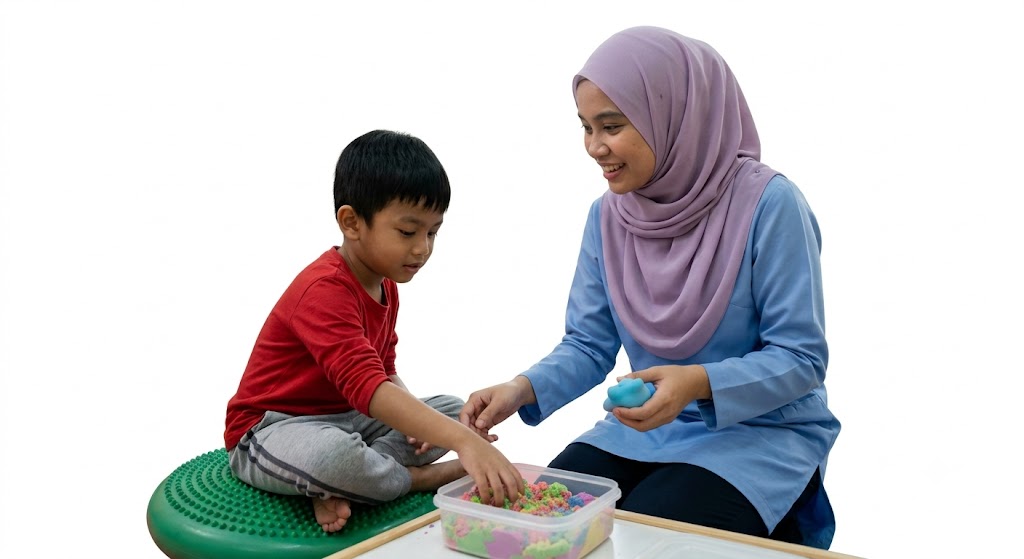
OCCUPATIONAL THERAPY SERVICES

Occupational therapists work with individuals of all ages to support them in achieving independence and participating in everyday tasks. 


Paediatric

We support children with developmental, sensory, learning, and physical challenges, including:

  • Autism spectrum disorder
  • Attention deficit hyperactive disorder (ADHD)
  • Global developmental delay (GDD)
  • Specific learning disabilities (Dyslexia, dyscalculia, dysgraphia)
  • Cerebral palsy / Brain injury
  • Down’s Syndrome
  • Hypersensitivity
book now

Neurological Rehabilitation

Occupational therapy helps adults regain independence and improve function following neurological conditions such as:

  • Stroke
  • Traumatic brain injury
  • Dementia

Mental Health

We help individuals improve daily functioning, emotional regulation, and community participation for conditions including:

  • Schizophrenia
  • Depression
  • Anxiety
  • Adult ADHD

Occupational Therapy Interventions

Occupational therapists assess a person’s needs, abilities, and environment, then develop tailored treatment plans. Therapy often includes:

  • Activities of Daily Living (ADL) Training

    Supports independence in everyday self-care activities, including dressing, feeding, grooming, bathing, and toileting.

  • Visual Perceptual & Visual Motor Training

    Improves the ability to interpret visual information and coordinate vision with hand movements for reading, writing, puzzles, and classroom tasks.

    Cognitive Rehabilitation

    Enhances attention, memory, problem-solving, planning, organisation, and executive functioning following neurological injury or cognitive impairment.

    Upper Limb & Hand Rehabilitation

    Improves strength, range of motion, coordination, and functional use of the arm and hand following injury, surgery, or neurological conditions.

Fine Motor Skills Training

Develops hand strength, finger coordination, and dexterity needed for tasks such as writing, drawing, cutting, buttoning clothes, and using utensils.

Gross Motor Skills Training

Improves balance, posture, coordination, strength, and body control to support activities such as walking, running, jumping, climbing, and sports participation.

Handwriting Intervention

Enhances handwriting skills by improving pencil grasp, letter formation, spacing, speed, visual-motor integration, and writing endurance.

Sensory Integration Therapy

Helps individuals process and respond appropriately to sensory information (touch, movement, sound, sight, and body awareness), improving attention, behaviour, emotional regulation, and participation in daily activities.

Social Skills Training

Develops communication, turn-taking, cooperation, emotional understanding, and appropriate social interactions in different settings.

book now